
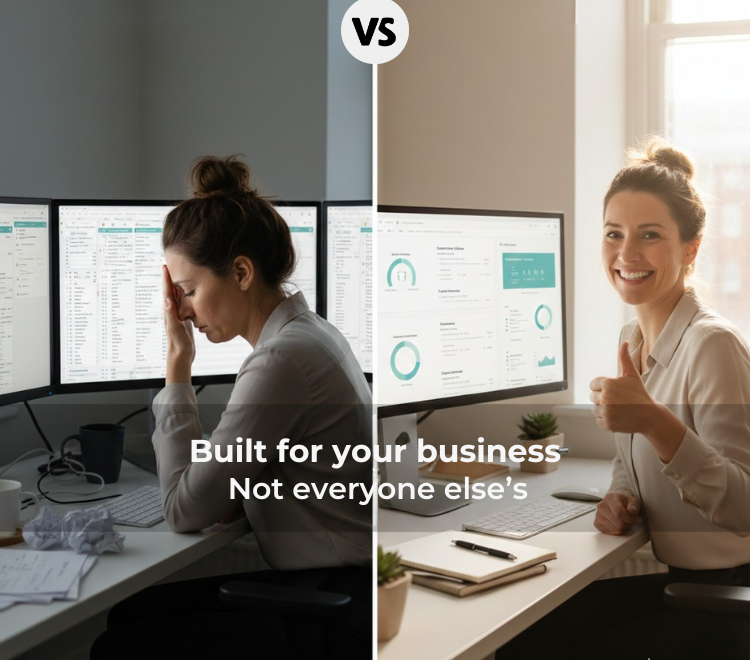
For years, businesses have been told to adapt their processes to fit their software.
Generic platforms promised to work for everyone, and ended up working perfectly for no one.
In 2026, that mindset is changing.
The fastest-growing shift in tech is toward vertical-specific software: technology built for one industry, one workflow, one reality. Not generic. Not bloated. Built for how people actually work.
Most off-the-shelf platforms try to serve recruitment, healthcare, education, logistics, retail, finance, all with the same tools. That leads to workarounds instead of workflows, endless custom fields with no logic, manual fixes for automated systems, and teams being trained to fight the software instead of use it. Instead of supporting operations, tech becomes another problem to manage.
Vertical-specific software flips that. It is built for a single industry. It understands the language people use every day, the rules they have to follow, the steps they repeat, and the pressures they work under. Instead of asking businesses to change how they work, it adapts to them.
One of the biggest reasons this shift is happening is fatigue. Teams are tired of bending their processes to fit rigid tools. They want systems that feel natural, that reduce training time, lower mistakes, and remove the need for endless “workarounds.” When software reflects real workflows, people move faster and with more confidence.
Another major driver is compliance. In industries like recruitment, education, healthcare, and logistics, compliance is not optional. Generic systems treat it as something to bolt on later. Vertical systems build it into the logic from day one; automated checks, expiry tracking, status changes, and audit-ready flows. Risk is managed by the system, not by someone remembering to update a spreadsheet.
Workflows are another reason generic tech is failing. A recruiter does not work like a logistics coordinator. A clinic does not operate like a retailer. Vertical software recognises this and allows journeys, permissions, automation, and reporting to be shaped around real roles and responsibilities. It stops pretending that everyone works the same way.
At JSBC Labs, this is exactly how we build. We create vertical software for recruitment, education staffing, logistics and recycling, and service-based businesses. We don’t start with features. We start with how your business actually runs. Then we design systems that match your workflows, support your compliance, integrate with your tools, and grow as your operation grows.
The biggest advantage of vertical software is clarity. When a system is built for your industry, people know what to do. Data makes sense. Reports reflect reality. Compliance becomes simpler. Training becomes easier. Teams stop fighting their tools and start focusing on their work.
The future of business tech is not bigger platforms with more features. It is smarter systems built for specific realities. Vertical-specific software doesn’t try to be everything to everyone. It tries to be exactly what one industry needs, and in 2026, that is what winning businesses are choosing.


