
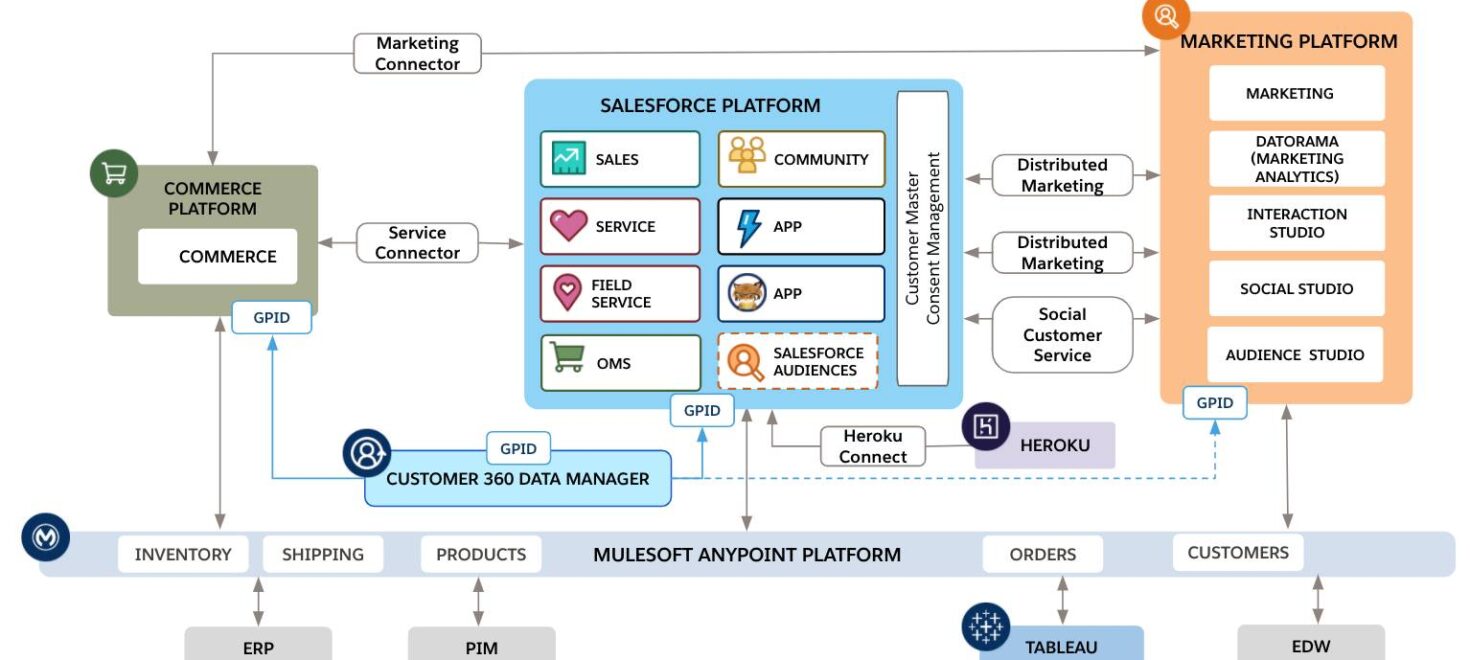
What Salesforce Actually Does and Why Serious Businesses Still Choose It
Why Everyone Talks About Salesforce…But Few Explain It Well Ask ten people what Salesforce does and you’ll get ten different answers. Some say it’s a sales tool.Others call it a database.On Reddit, you’ll often see people asking “Why is it so expensive?” or “Why does every company use it?” The confusion exists because Salesforce isn’t […]
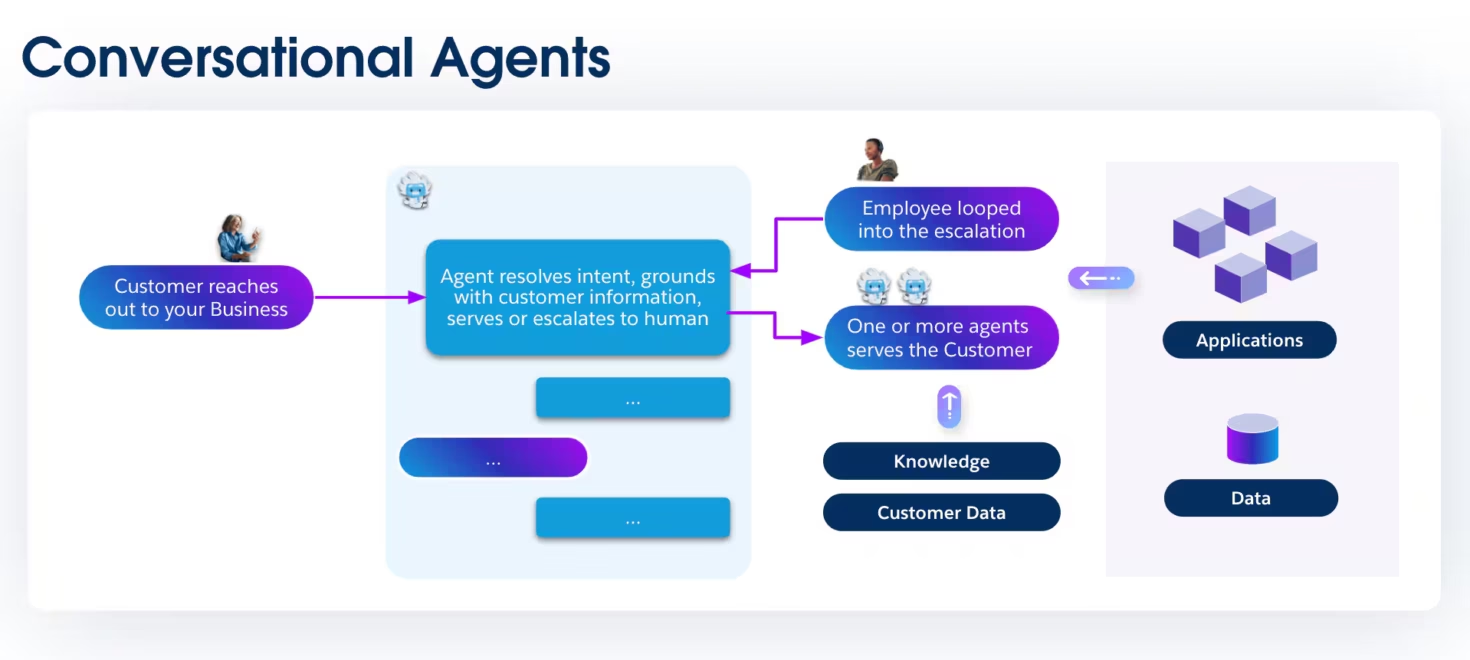
Salesforce Agentforce Explained: What It Is and Why It Matters
Salesforce Agentforce represents a fundamental shift in how work is executed inside Salesforce. Rather than automating steps, Agentforce introduces autonomous, goal-driven agents that can reason, act, and adapt across systems. This article explains what Agentforce really is, how it differs from Einstein, Flow, and bots — and why it matters for enterprises planning AI at […]

Why “Just Adding a Tool” Rarely Fixes Operational Problems
When processes start breaking down, the instinct is usually the same: add a tool.
A new CRM. A new reporting platform. Another integration. A new dashboard to “get visibility”.
But most of the time, adding technology doesn’t solve the problem, it simply moves the problem somewhere else.
Because the truth is: tools don’t fix operations. Process does.
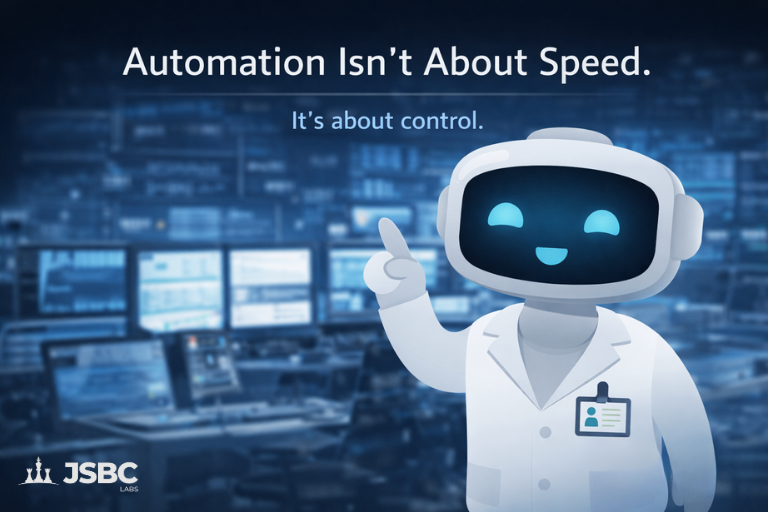
Automation Isn’t About Speed — It’s About Control
Automation is often sold as a shortcut.
Faster processes. Faster output. Faster growth.
But in practice, speed is rarely the real problem organisations are trying to solve.
What they’re actually struggling with is control.

Building Calm, Not Chaos: The Labs Way
Chaos is often mistaken for momentum. Busy calendars, constant messages, last-minute decisions — they can all look like progress from the outside. Inside the business, though, chaos is expensive. It drains focus, erodes trust, and keeps teams reacting instead of moving deliberately.

Why SOPs Fail — And How to Build Ones Your Team Will Actually Use
Most teams don’t ignore SOPs because they don’t care about process. They ignore them because the documents don’t reflect how work actually gets done. Over time, SOPs become something people are told to follow, rather than something they rely on.

Operational Visibility: The Difference Between Guessing and Leading
Most leadership teams believe they have visibility. They have dashboards, reports, weekly updates, and meetings filled with numbers. On the surface, information is everywhere. And yet, when decisions need to be made quickly or confidently, uncertainty creeps in.

Your CRM Isn’t the Problem — The Way It’s Set Up Is
Most teams don’t struggle with their CRM because they chose the wrong platform. They struggle because the system they have doesn’t reflect how their business actually operates. Over time, the CRM becomes something people tolerate rather than trust, and once trust is lost, adoption quickly follows.

Why Most Digital Projects Fail After Go-Live
Most digital projects don’t fail because the technology was wrong.
They fail because everyone assumed the work was done once the system went live.
A Year of Building Better Systems — And What Comes Next
To everyone we’ve worked with this year — thank you for the trust, the openness, and the willingness to do the unglamorous work that actually makes a difference.
We’ll see you in the new year. Steady, clear, and ready to build.


