
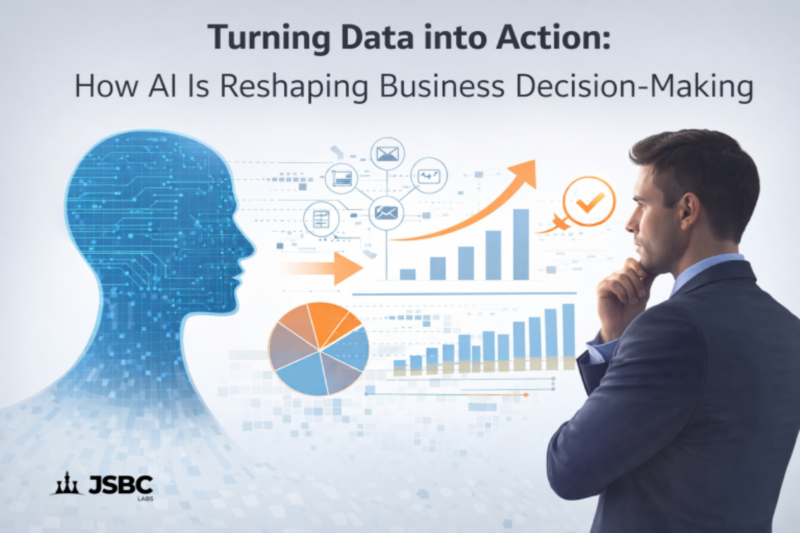
Data has become one of the most valuable assets in modern business, but only when it is used effectively.
Many organizations collect vast amounts of information across multiple systems, from customer interactions and sales activities to operational processes and support channels. Despite this, they often struggle to turn that data into meaningful action. The challenge is not access, it’s activation.
Without a clear strategy for connecting and leveraging data, valuable insights remain hidden, and decision-making becomes reactive rather than proactive.
One of the biggest obstacles is fragmentation.
Data is often spread across different platforms: CRM systems, ERP solutions, marketing tools, and customer service applications. Each system holds a piece of the puzzle, but without integration, it is difficult to form a complete picture. This lack of visibility leads to missed opportunities, inconsistent customer experiences, and slower decision-making.
Creating a unified view of data is the first step toward solving this problem.
Platforms like Salesforce Customer 360 bring together information from across the business, enabling organizations to see their customers more clearly and operate more cohesively. With a single source of truth, teams can align their efforts, make informed decisions, and respond more effectively to changing needs.
However, unifying data is only part of the equation.
The real transformation happens when artificial intelligence is introduced.
AI acts as a decision engine, turning raw data into actionable insights. It can analyze patterns, predict outcomes, and recommend next steps in real time. With tools like Salesforce Einstein, businesses can move beyond simply understanding what has happened to anticipating what will happen next.
This shift from reactive to predictive decision-making is a game changer.
Instead of responding to customer behavior after the fact, organizations can proactively engage, personalize experiences, and optimize operations. AI enables automation of repetitive tasks, freeing up teams to focus on higher-value activities while ensuring consistency and efficiency at scale.
The impact extends across the entire business.
Customer service becomes more responsive and personalized. Sales teams gain better visibility into opportunities and risks. Marketing efforts become more targeted and effective. Operations become more efficient and data-driven.
Ultimately, the combination of unified data and AI creates a powerful competitive advantage.
Organizations that can turn insight into action quickly are better positioned to meet customer expectations, adapt to market changes, and drive sustainable growth. Those that cannot risk falling behind, overwhelmed by the very data they collect.
The future belongs to businesses that don’t just gather data, but use it intelligently.
Because in today’s landscape, it’s not data that drives success. It’s what you do with it.


